
The 1-year results of a phase 2, sham-controlled RCT have confirmed the safety of a transcatheter interatrial shunt device (IASD; Corvia Medical) with no significant cardiovascular or renal events as compared to those receiving sham control treatment. It has also confirmed the long-term patency of the device. The findings were presented at the ESC and have also been simultaneously published in JAMA Cardiology.
In an interview with Dr. Michael Gibson at the annual ESC conference held in Munich, Dr. Ted Feldman explained that the idea behind putting a shunt was rooted in the history of medicine. Lutembacher syndrome, well known to many cardiologists, is a syndrome with mitral stenosis, elevated Left Atrial Pressure (LAP) leading to pulmonary congestion with exertion, decompressed by an Atrial Septal Defect (ASD). In the trial, the investigators applied this principle to heart failure with preserved or mid-range ejection fraction (EF), the idea being that with exertion, there is a pressure relief communication between the right and left atrium. In order to evaluate the one year safety and clinical outcomes of the IASD, a phase 2, multicentre,double-blind, 1-to-1 sham-controlled multicenter mechanistic RCT of IASD implantation vs a sham procedure was conducted in patients with heart failure (HF) and left ventricular ejection fraction (LVEF) equal to or greater than 40%.
The clinical endpoints assessed were safety endpoints including major adverse cardiac, cerebrovascular, or renal events (MACCRE). Other outcomes evaluated at 1 year included hospitalizations for HF, NYHA class, KCCQ and EQ-5D, a 6-minute walk test, and device patency (Echo core lab assessment of shunt flow).
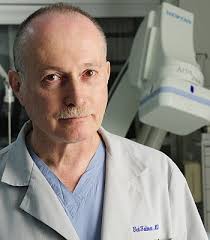 [perfectpullquote align=”full” bordertop=”false” cite=”” link=”” color=”” class=”” size=””]“Altogether, we have a pilot trial with 11 patients, non-randomized study with 64 patients and 22 patients treated in the randomized group. When we look at all of them, it is pretty clear that we have demonstrated both mechanistically, that these exercise wedge pressures diminish and that the various clinical indications are all favorable.”- Dr. Ted Feldman, M.D.[/perfectpullquote]
Though the study was not adequately powered for the clinical endpoints, trends favored the IASD. The results showed that after 1 year, shunts were patent in all IASD-treated patients; MACCRE did not differ significantly in the IASD arm (9.5% vs 22.7%; P = .41), and no strokes occurred. The yearly hospitalization rates for HF were 0.22 and 0.63 in the IASD and control arm respectively (P = .06). IASD was also associated with favorable trends in NYHA class.
Summing up the results of all the studies, Dr. Ted Feldman said, “Altogether, we have a pilot trial with 11 patients, non-randomized study with 64 patients and 22 patients treated in the randomized group. When we look at all of them, it is pretty clear that we have demonstrated both mechanistically, that these exercise wedge pressures diminish and that the various clinical indications are all favorable.” Discussing the idea behind the 0.8cm IASD, Dr. Feldman explained that the basis for size selection of 0.8 cm was clinical. It had been noted that people presenting in their 50-60s with dilated right hearts and new onset symptoms had ASDs typically ≥ 1 cm, whereas the size in incidental cases was ≤0.5cm. Hence, a shunt size in the middle was selected (0.8cm) with realistic expectations to decompress the left atrium with exercise.
Speaking about the future, Dr. Feldman is excited about the ongoing PIVOTAL trial, which is a 608 patient strong, randomized, 1:1, sham-controlled trial currently in the recruiting phase. He expresses his optimism for the trial saying, “As we have clearly demonstrated the mechanistic effect in a small trial, we can realistically attribute the clinical endpoints in the PIVOTAL trial to the mechanism.”
Source: https://jamanetwork.com/journals/jamacardiology/fullarticle/2698188