
A new study published in the New England Journal of Medicine showed no significant difference in the risk of major adverse cardiac events (MACE) between patients undergoing endoscopic and open harvest of the saphenous vein grafts for coronary artery bypass grafting (CABG).
Are the two techniques really different?
A total of 1150 patients from 16 veterans affairs cardiac surgery centers were randomized to either undergoing open or endoscopic saphenous vein-graft harvesting. The primary outcome was a MACE composite (death from any cause, nonfatal myocardial infarction, and repeat revascularization). MACE occurred in 15.5% of the open-harvest group of patients and 13.9% of the endoscopic-harvest group (HR 1.12; 95% confidence interval [CI] 0.83 to 1.51; P = 0.47). Death from any cause occurred in 8% of the open-harvest group and 6.4% of the endoscopic-harvest group (HR 1.25; 95% CI 0.81 to 1.92). Myocardial infarction occurred in 5.9% of the open-harvest group and 4.7% of the endoscopic-harvest group (HR 1.27; 95% CI 0.77 to 2.11).
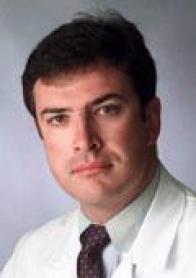 [perfectpullquote align=”full” bordertop=”false” cite=”” link=”” color=”” class=”” size=””]“I believe that one of the conclusions is that in an expert’s hand, an endoscopic harvest is probably the preferred approach in 2018. Now, we are moving to the use of multiple arterial conduits but it is unlikely that we are going to shelf vein graft. It will always be part of the mixture.” -Dr. Marco Zenati, M.D.[/perfectpullquote]
The study also looked into the incidence of leg-wound infections. This complication occurred in 3.1% of the open-harvest group and 1.4% of the endoscopic-harvest group (RR 2.26; 95% CI 0.99 to 5.15) with no significant difference between the two groups. Dr. Marco Zenati (VA Boston Healthcare System) commented, “The major limitation of the study published in 2009 was that they had no information about who harvested the veins. That’s very important because there’s a steep learning curve to do an endoscopic harvest.”
The role of surgeon expertise
Saphenous vein grafts are the most commonly used conduits for CABG with the high rates of graft failure and the harvest site complications being the major adverse outcomes for this procedure. In the US, most of the saphenous vein grafts are harvested using the endoscopic vein-graft harvesting technique. However, the patency of the grafts harvested using this technique was consistently lower than grafts harvested using nonendoscopic techniques in previous data. This is possibly due to the overstretch injury occurring due to endoscopic harvesting when the procedure is performed by inexperienced surgeons.
The trial design required a high degree of expertise in the surgeons as inexperienced surgeons can cause unnecessary stretching of the vein during harvesting. The authors identified some limitations of the study such as the absence of imaging evaluation of the graft patency, the focus on experienced harvesters. Also in the open-harvest group, all the procedures were performed using the traditional open harvesting technique without using the open ‘no-touch’ technique. Dr. Zenati concluded, “I believe that one of the conclusions is that in an expert’s hand, an endoscopic harvest is probably the preferred approach in 2018. Now, we are moving to the use of multiple arterial conduits but it is unlikely that we are going to shelf vein graft. It will always be part of the mixture.”